Dyslexia Study Tools: AI That Reads, Chunks and Quizzes
The most useful dyslexia study tools do three jobs: they read text aloud so decoding takes less effort, they shrink long material into short, clear chunks, and they turn reading into quick recall practice with flashcards and quizzes. Combined, they let you spend your energy on understanding and remembering instead of on decoding.
You read the first page of a chapter carefully. By page six, you have spent so much effort on the words that the ideas from page one are already slipping away. If you have dyslexia, that pattern is familiar, and it says nothing about how smart you are. It says that decoding text is using up energy that should go to learning. Good dyslexia study tools move that energy back where it belongs.
You are far from alone. The Yale Center for Dyslexia and Creativity states that dyslexia affects 20 percent of the population and makes up 80 to 90 percent of all learning disabilities. This guide focuses on study technique: which AI tools help, how to use them together, and how to set up a session that works with your brain instead of against it.
Which dyslexia study tools actually help?
Tools that cut the decoding load (text-to-speech and dictation), tools that shrink text into short chunks (AI summaries), and tools that replace rereading with recall (flashcards and quizzes). Each solves a different part of the problem.
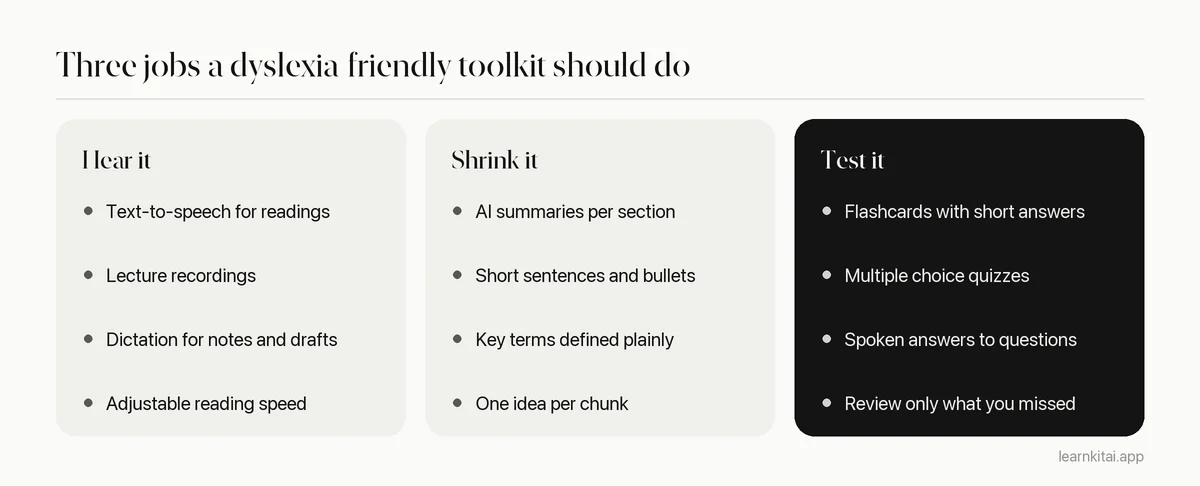
The third column is the one many people skip, and it may be the most important. Dyslexia makes rereading expensive. Recall practice is cheaper per minute and works better for memory anyway. A flashcard asks you to read one short line, then think. That is a much better trade than reading a page again.
Does text-to-speech improve reading comprehension?
On average, yes, by a modest amount. A meta-analysis of studies on students with reading disabilities found a positive effect of about one third of a standard deviation, with results varying between studies. It works best paired with active study, not as a replacement for it.
Wood and colleagues pooled the research on text-to-speech and read-aloud tools for students with reading disabilities and found an average effect size of 0.35 on reading comprehension. In plain terms: a real, moderate help, not a miracle. The studies varied, which suggests that how you use the tool matters.
- Follow along. Turn on word highlighting if your tool has it, so your eyes and ears work together.
- Start at normal speed. Speed up only once you can still summarize each paragraph after hearing it.
- Pause at headings. Say in one sentence what the last section was about before moving on.
- Use a natural voice. Modern voices are much easier to listen to for long stretches.
How can AI summaries help with dyslexia?
A summary gives you the shape of a chapter before you read it, so the full text is easier to follow. Ask for short sentences, one idea per bullet and plain definitions. Then read or listen to the original with that map in mind.
Think of the summary as a preview, not a replacement. When you already know the four main points of a chapter, every paragraph becomes a detail that fits somewhere. That is a lot less work than holding loose sentences in memory while you search for the point. Breaking material into small groups also matches how memory handles information, which our piece on chunking explains.
Always check a summary against the source for the facts you will be tested on. AI can drop an exception or flip a detail, and you do not want to learn the wrong version. Our guide to checking AI notes for errors has a quick routine.
Why are flashcards a good fit for dyslexic learners?
Flashcards keep reading short and put the effort on recall, which is what builds memory. Each card is one question and one brief answer, so you can study many ideas without long blocks of text.
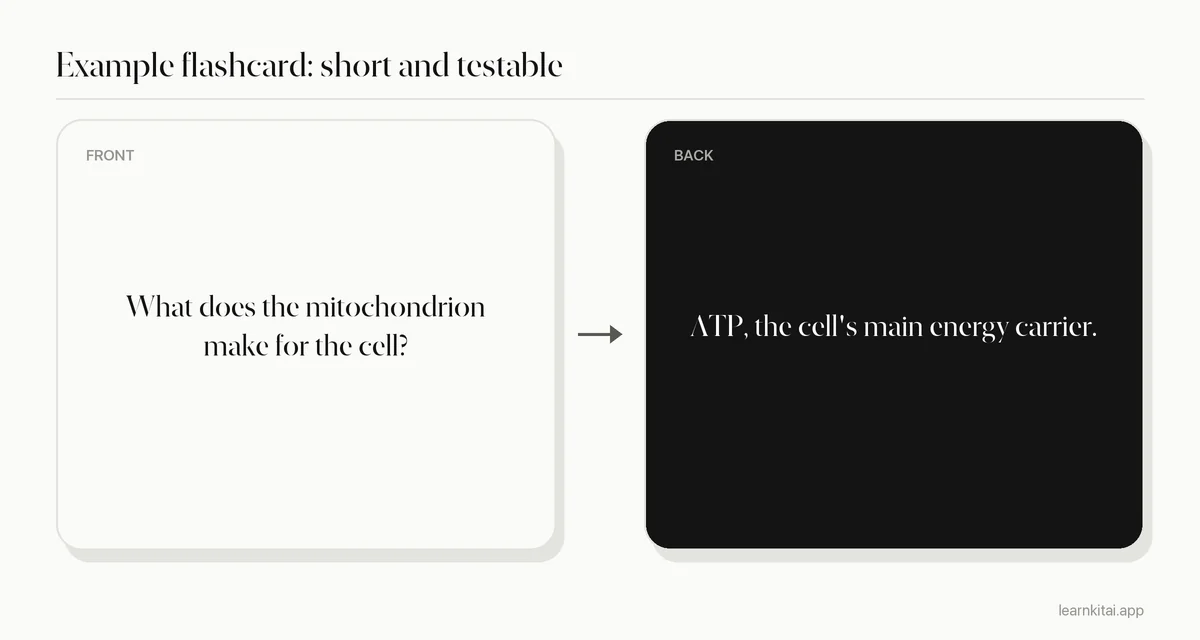
Notice what makes this card work: under ten words on the front, one fact on the back. Long cards with full paragraphs bring the reading problem right back. Our guide to making effective flashcards covers how to keep each card that tight. AI is helpful here because it can draft a deck from your notes in seconds, which saves the slow writing step. Then you edit and test.
A dyslexia-friendly study session
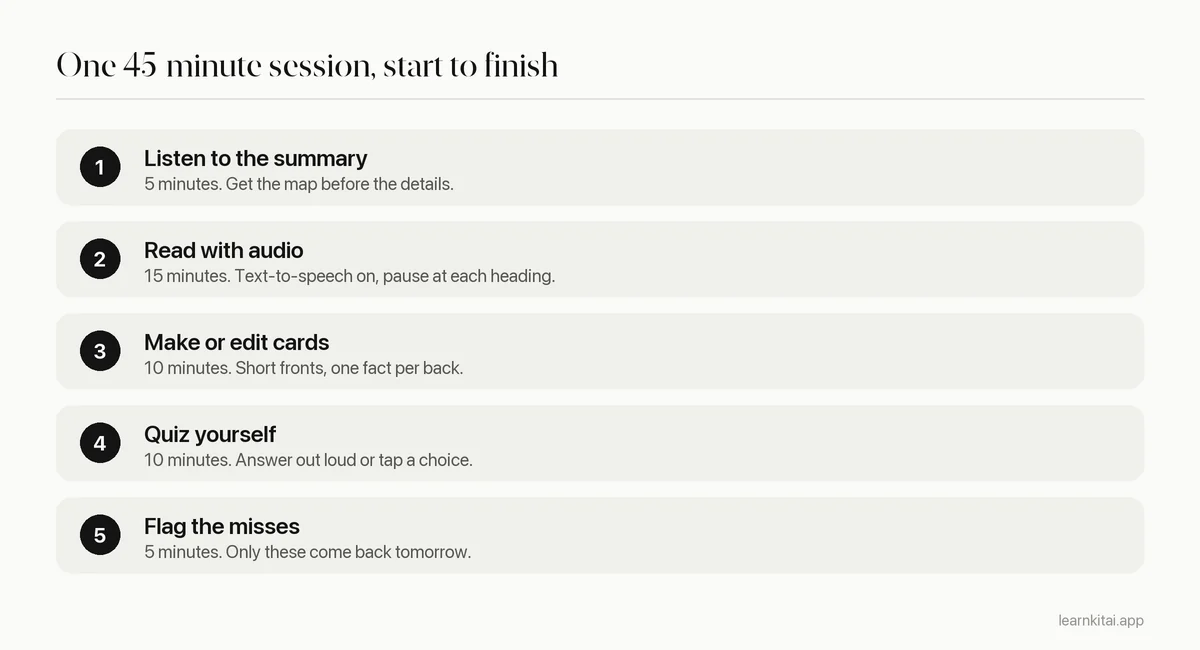
If your course has recorded lectures, add them to the mix. Listening is often easier than reading, and you can turn a recording into notes and questions. See notes from a lecture recording for a method. Printed handouts work too: photograph the pages and let a tool pull the text, as described in notes from scanned pages.
The LearnKit iPhone app covers several of these steps in one place: it can scan textbook pages, record lectures, and turn either into a short summary, flashcards or a quiz.
Should you also ask for formal accommodations?
Yes, if you qualify. Tools help you study, but accommodations change how you are tested. Common ones include extra exam time, a quiet room and read-aloud software. Your school's disability or accessibility office can explain what is available.
The Yale center notes that high school and college students with dyslexia typically need extra time on tests, and lists options such as a quiet testing room and read-aloud software. Ask early in the term, since paperwork can take weeks. The tools in this guide and formal support work best together.
Small setup changes that add up
- Pick a clear font and size that feels easy to you; there is no single best choice.
- Increase line spacing and keep lines short by narrowing the window.
- Try a soft background color if bright white feels tiring.
- Keep one source open at a time to cut visual clutter.
- Use dictation for first drafts, then edit with text-to-speech reading it back.
None of these dyslexia study tools changes what you are capable of. They change how much effort the reading costs, so more of you is left for the thinking. For more ways to bring AI into your routine, read how to use AI to study.
Frequently asked questions
Is using AI tools for dyslexia considered cheating?
Using AI to read aloud, summarize your materials or quiz you is studying, not cheating. The rules apply to graded work you submit. If you want to use a tool during an exam, arrange it as a formal accommodation first.
Are audiobooks as good as reading for studying?
For understanding, listening can work well, and for many dyslexic students it is less tiring. Memory still comes from recall, so follow listening with questions or flashcards rather than listening again.
Can dictation help with essays?
Yes. Speaking a first draft lets you get ideas down without fighting spelling. Then edit the text, and use text-to-speech to hear it back, which helps you catch missing words and awkward sentences.
Do I need a diagnosis to use these tools?
No. Anyone can use text-to-speech, summaries and flashcards. A formal assessment matters for official accommodations like extra exam time, so speak with your school if you think you may have dyslexia.
Sources
- Dyslexia FAQ, Yale Center for Dyslexia and Creativity (Dyslexia affects 20 percent of the population and 80 to 90 percent of learning disabilities; extra time, quiet room and read-aloud software as accommodations.)
- Does Use of Text-to-Speech and Related Read-Aloud Tools Improve Reading Comprehension for Students with Reading Disabilities? A Meta-Analysis, Wood, Moxley, Tighe and Wagner, Journal of Learning Disabilities (via PubMed Central) (Pooled effect size of 0.35 (95% CI 0.14 to 0.56) for text-to-speech on reading comprehension.)
- What is dyslexia?, British Dyslexia Association (Describes dyslexia as primarily affecting reading and writing, with effects on processing and memory.)
Keep reading
AI for Studying: Make It Quiz You, Not Think for You
AI can make you a stronger student or a more dependent one. The difference is whether it does the thinking or makes you do it.
AI Flashcard Generator Tips: Make Cards Worth Reviewing
AI can draft a deck in seconds. Whether that deck helps you depends on a ten-minute edit most students skip.
How to Make Flashcards That Still Work Three Weeks Later
Most flashcards fail before you ever study them, because of how they are written. Seven rules, real before and after cards, and a study routine that keeps them working.
Chunking Memory: Fit More Into a Mind That Holds Four
Working memory holds only a few items at once. Chunking packs many details into each item. How it works, the research, and how to chunk any topic you study.
Notes From Photos of Pages: Scan Less, Learn More
A camera roll full of textbook pages is not a set of notes. Here is how to turn page photos into clean text, short notes and questions you can test.